
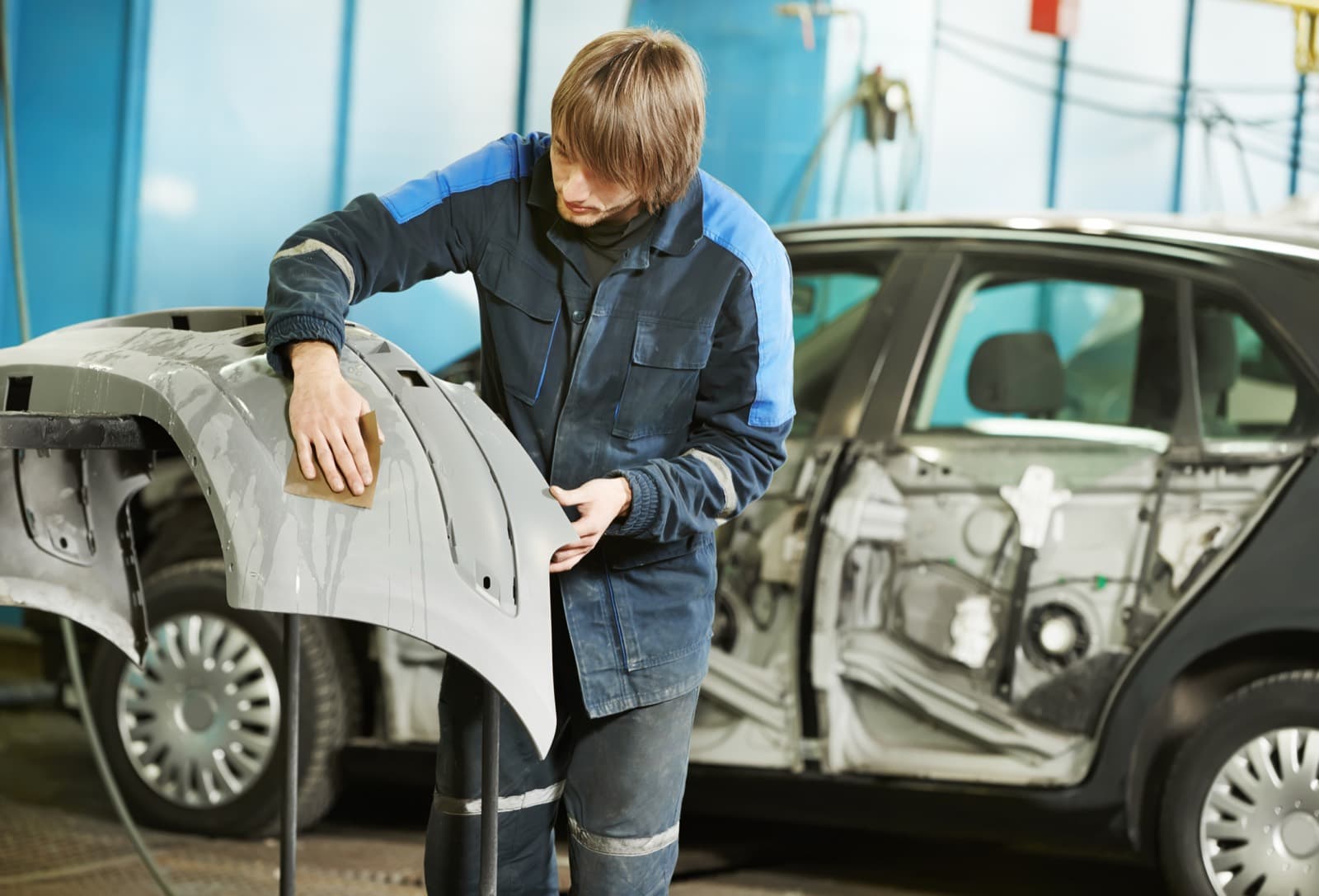
If you've just gotten a repair estimate after an accident, you may have noticed a line mentioning "aftermarket" parts and wondered what that actually means for your car. It's a fair question, and it's one that gets less straightforward explanation than it should. This guide covers the real difference between oem vs aftermarket car parts, what your insurance company is and isn't required to pay for, and exactly how to ask for OEM parts if that's what you want on your vehicle.
The short answer
OEM stands for Original Equipment Manufacturer. An OEM part is made by, or on behalf of, your vehicle's manufacturer, to the exact specifications of the part that came on your car originally. Aftermarket parts are made by a different company, not your vehicle's manufacturer, designed to fit and function similarly but not built to the manufacturer's exact specifications or under its quality control.
Neither term automatically means "better" or "worse" for every situation. The difference matters most for fit, finish, and how the part performs in specific safety-related applications, and it matters for your wallet, since aftermarket parts are usually less expensive, which is exactly why insurers often specify them on an estimate.
What OEM parts actually are
An OEM bumper cover, headlight assembly, or fender is manufactured to the same specifications as the part your car left the factory with, often by the same supplier that makes parts for the manufacturer's assembly line. Fit is generally exact, since it's built from the manufacturer's own tooling and design, and the finish, mounting points, and material grade match what your vehicle originally shipped with. Because of that, an OEM part usually installs with little to no adjustment.
OEM parts typically cost more than aftermarket equivalents, sometimes considerably more, and that price difference is the main reason they aren't automatically used on every repair. An insurer paying a claim has an incentive to keep repair costs down, and specifying aftermarket parts where they're allowed is one of the more direct ways to do that. That's not necessarily a problem for your repair, but it's worth understanding why the choice gets made the way it does.
What aftermarket parts actually are
Aftermarket parts are made by independent manufacturers, not affiliated with your car's manufacturer, to fit and function similarly to the original part. Quality varies significantly between aftermarket manufacturers and even between parts from the same manufacturer, and sometimes between different production runs of the exact same part number. Some aftermarket parts fit and perform essentially the same as OEM, made to tight tolerances by an established supplier. Others fit poorly, need extra labor to trim or adjust during installation, or don't hold up as well to sun, weather, or vibration over time.
Because quality varies so much, an independent certification program exists specifically to address this: CAPA (Certified Automotive Parts Association) tests and certifies aftermarket parts against a set of fit, material, and performance standards, and audits manufacturing facilities to confirm parts continue meeting those standards over time. A CAPA-certified aftermarket part has been independently tested against those standards; a non-certified aftermarket part hasn't, which doesn't necessarily mean it's low quality, but it does mean there's no independent verification behind it. If your estimate specifies aftermarket parts, it's worth asking whether they're CAPA-certified, and asking to see the part before it's installed if that would put your mind at ease.
There's also a middle category worth knowing about: used OEM parts, sometimes called "recycled" or "LKQ" (like kind and quality) parts, pulled from another vehicle. A used OEM part is genuinely made by your vehicle's manufacturer, just not new, and its condition depends entirely on the donor vehicle and how the part was stored and handled before it reached your shop. Some estimates will specify used OEM parts rather than new aftermarket ones, which is a different trade-off worth asking about if you see it on your paperwork.
What Maryland law requires the shop to tell you
Maryland doesn't leave this disclosure to chance. Under Md. Code, Commercial Law § 14-2302, if a body shop plans to use aftermarket crash parts in your repair, the shop has to give you a written statement, in clear, conspicuous, 10-point capital type, that:
- the aftermarket parts are not manufactured by your vehicle's original manufacturer or by a manufacturer authorized to use that manufacturer's name or trademark, and
- using aftermarket crash parts may modify the original manufacturer's warranty on the parts being replaced.
On top of that, if you ask, the shop has to give you a copy of the warranty for any aftermarket crash part used, if one is available. In practice, this means the aftermarket-vs-OEM decision shouldn't be a surprise buried in a line item. It should be disclosed to you in writing before the repair happens, and you have the right to ask questions about it.
What your insurer will and won't pay for
Here's the part that catches a lot of drivers off guard: your insurer is not required to pay for OEM parts unless your specific policy provides that coverage. According to Maryland Insurance Administration consumer guidance, most auto policies only obligate the insurer to pay for repairs using parts of "like kind and quality," and aftermarket parts can meet that standard even though they aren't OEM. That's the policy language that gives insurers room to specify aftermarket parts on an estimate by default.
Some insurers offer an OEM parts endorsement, an optional add-on to your policy that guarantees OEM parts will be used (or that the insurer will cover the cost difference) if your car needs bodywork. If having OEM parts on your vehicle matters to you, it's worth calling your insurance agent and asking directly whether your policy includes this, and if not, what it would cost to add it before you ever need to file a claim.
Can I ask for OEM parts on my repair?
Yes, you can always ask. Whether it costs you anything out of pocket depends on your policy. If your policy doesn't include an OEM parts guarantee and the insurer's estimate is based on aftermarket parts that meet the "like kind and quality" standard, you may be responsible for the price difference if you insist on OEM instead. If your policy does include OEM coverage, or if state or manufacturer requirements call for OEM in your specific situation, you shouldn't have to pay extra.
A few situations where it's worth asking for OEM specifically, regardless of what the standard estimate specifies:
- Newer vehicles still under factory warranty. Ask whether using non-OEM parts on visible or structural components could affect any part of your existing vehicle warranty.
- Safety-critical or structural parts. Components tied to airbags, seatbelts, or the vehicle's structural frame are treated differently than cosmetic trim, and many shops and insurers already default to OEM or manufacturer-specified parts for these because of how tightly they're tied to how the vehicle performs in a future collision.
- Leased vehicles. Lease agreements sometimes have their own requirements about repair quality and parts at lease-end inspection, so it's worth checking your lease terms if you're not sure.
Does it affect my safety if a part isn't OEM?
It depends heavily on what the part is. A non-OEM bumper cover, grille, or trim piece is a cosmetic and fit question, not typically a safety one. Structural components, and anything tied to how the vehicle absorbs or manages impact in a future collision, are a different story, which is exactly why manufacturers publish specific repair procedures for structural work and why a responsible shop follows those procedures regardless of whether the parts involved are OEM or aftermarket. If you have any question about whether a specific part on your estimate is structural or safety-related, ask the shop directly. A shop that can explain, in plain terms, why a particular part is or isn't a good candidate for an aftermarket substitute is doing its job the way it should be done.
How to read your estimate for parts type
Estimates use shorthand that isn't always obvious if you haven't seen one before. A few abbreviations to look for:
- OEM or "genuine": made by, or on behalf of, your vehicle's manufacturer.
- AM or "aftermarket": made by an independent manufacturer, not your vehicle's manufacturer.
- LKQ or "used OEM": a genuine manufacturer part, taken from another vehicle rather than new.
- Recon or "reconditioned": a part, often something like a wheel or a headlight assembly, that's been repaired or refinished rather than replaced outright.
If any of these appear next to a part on your estimate and it isn't clear which one applies, ask the shop to walk through it line by line before you approve the repair. You're not being difficult by asking; this is exactly the kind of question Maryland's disclosure law assumes you might have.
How The Collision Center handles OEM vs. aftermarket
We tell you up front which parts on your estimate are OEM and which are aftermarket, rather than letting it sit as a line item you have to decode yourself. If your insurer's estimate specifies aftermarket parts, we'll walk you through what that means for your specific vehicle and let you know your options, including what it would take to move to OEM parts if that's what you want. Our goal is for you to make that decision with the information Maryland law already says you're entitled to, not to make it for you.
We work on vehicles from Hereford and the surrounding Maryland communities, and the OEM-versus-aftermarket question comes up on nearly every insurance-paid repair we do. Drivers usually aren't asking us to pick a side; they just want to understand what's actually going on their car before we start.
If you're weighing OEM vs. aftermarket on your own estimate, or you just want a second opinion on a repair plan before committing to it, get a free estimate from our collision repair team. You can also read more about our collision repair process, including how we handle parts sourcing and insurer coordination.
Common Questions
Frequently asked questions
What's the difference between OEM and aftermarket parts?
OEM parts are made by, or on behalf of, your vehicle's original manufacturer, to the exact original specifications. Aftermarket parts are made by independent manufacturers to fit and function similarly, but not to the manufacturer's own tooling and quality control.
Does my insurance company have to use OEM parts on my repair?
No, not unless your specific policy includes an OEM parts endorsement. Most standard policies only require parts of "like kind and quality," a standard aftermarket parts can meet.
Can I request OEM parts even if my insurer specifies aftermarket?
Yes, you can ask. If your policy doesn't cover the cost difference, you may be responsible for paying it yourself. If your policy includes OEM coverage, you generally shouldn't have to.
Does Maryland law require shops to tell me if aftermarket parts are being used?
Yes. Under Md. Code, Commercial Law § 14-2302, a body shop must give you a written, clearly presented statement when aftermarket crash parts will be used, and provide a copy of the aftermarket part's warranty if you ask for one.
What is CAPA certification?
CAPA (Certified Automotive Parts Association) is an independent program that tests aftermarket parts against fit, material, and performance standards. A CAPA-certified part has been independently verified against those standards; it's worth asking whether the aftermarket parts on your estimate are CAPA-certified.
Are aftermarket parts unsafe?
Not inherently. Quality varies by part and manufacturer, and the more relevant question is usually whether a specific part is structural or safety-related, where manufacturer-specified repair procedures matter most, versus cosmetic, where fit and finish are the main concern.
What does "LKQ" or "used OEM" mean on my estimate?
LKQ stands for "like kind and quality" and usually refers to a used, genuine OEM part taken from another vehicle rather than a new part. It's a genuine manufacturer part, just not new, and its condition depends on the donor vehicle it came from.
Get a free estimate
If you have been in an accident, the choice of shop is yours. We will document the repair, coordinate with your insurer’s appraiser, and explain every step in plain terms.